NANOSPONGES Nanosponges are a class of nanoparticles that are characterized by their porous, sponge-like structure. They are made from cross-linked polymers, typically cyclodextrins, which are cyclic oligosaccharides that can form inclusion complexes with various molecules, including drugs. These structures have a highly porous network that can trap and encapsulate drugs, enhancing their solubility, stability, and […]
Explore More
NANOSUSPENSIONS Nanosuspensions are submicron colloidal dispersions of poorly soluble drugs, in which the active pharmaceutical ingredient (API) is reduced to nanoparticles (usually in the range of 100–1000 nm). The drug particles in nanosuspensions are typically stabilized by surfactants or polymers to prevent aggregation and ensure uniform dispersion. Key Features: Size: The drug particles are reduced […]
Explore More
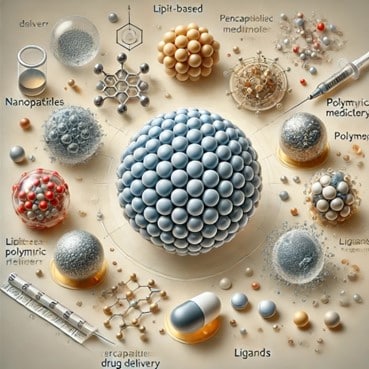
NANOPARTICLES Nanoparticles are particles that range in size from 1 to 100 nanometers (nm) in diameter. Due to their extremely small size, nanoparticles possess unique physical and chemical properties compared to their bulk counterparts, which makes them particularly useful in a variety of fields, including pharmaceuticals, medicine, electronics, and materials science. Types of Nanoparticles: Nanoparticles […]
Explore More